
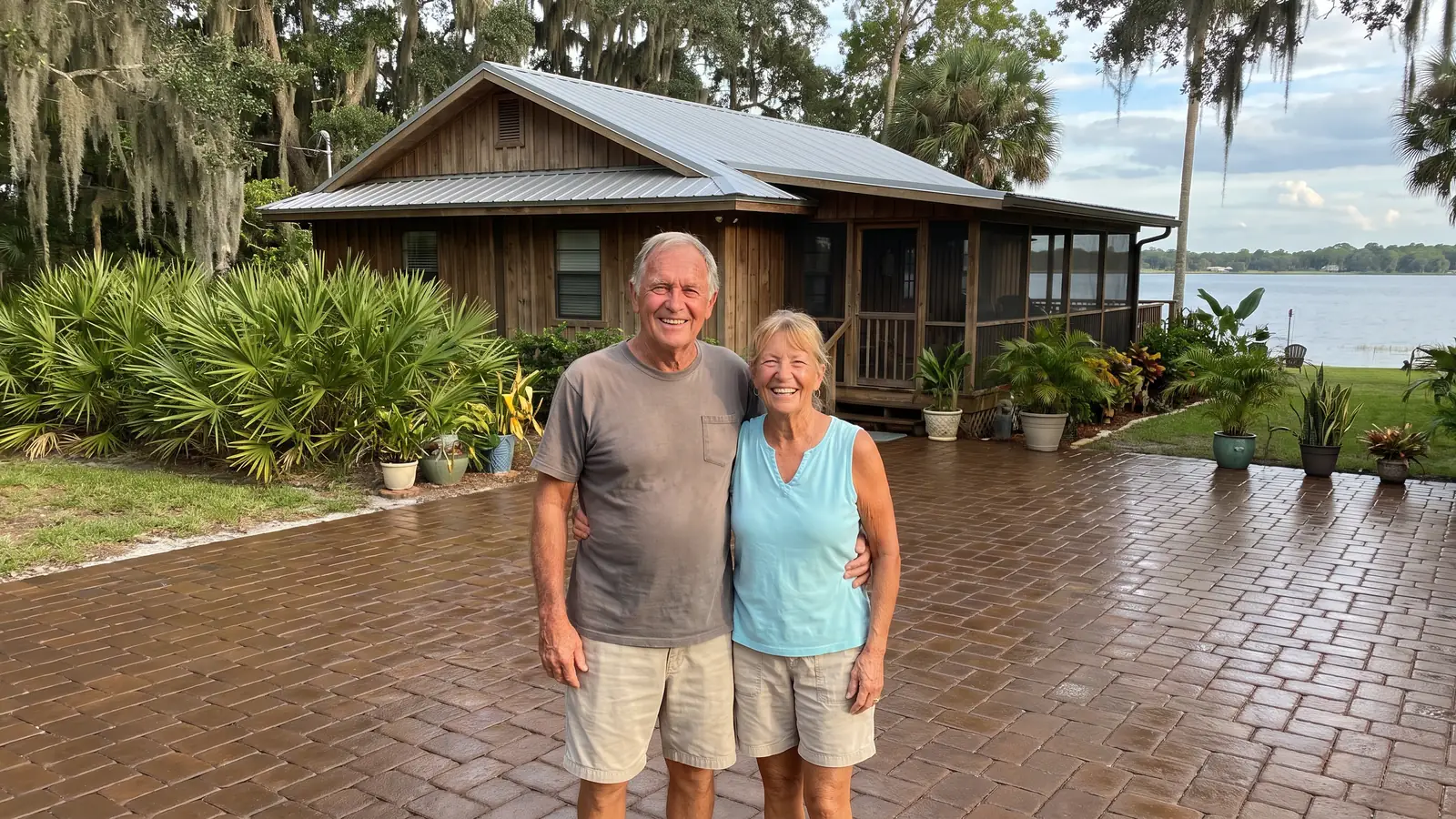
Paver sealing for Nocatee homes
Paver Sealing in Nocatee, FL
Nocatee's wide driveways and screened pool decks add up fast, so call (386) 977-8354 for a free paver sealing estimate.
- Brings out deeper paver color
- Fresh joint sand helps lock pavers in place
- Gives weeds less room to grow
- Makes the surface easier to keep clean
- Free estimate, no obligation
Request a Free Estimate
Free, no obligation.
Fast, careful paver sealing in Nocatee
Paver sealing is available across Nocatee, from Crosswater and Coastal Oaks to Twenty Mile and the neighborhoods near Town Center. A local contractor washes, re-sands and seals driveways, lanais and pool decks, and a first look at your lot is free. Reach out and a reply comes within 1 business day, usually much sooner. To get started, ask for a free estimate.
Think of a wide driveway whose color has dulled, with sand missing from joints along the edge and tire arcs near the garage. A wash, fresh sand and a new coat bring the whole surface back to one tone. To describe your pavers to someone who knows the area, call (386) 977-8354.
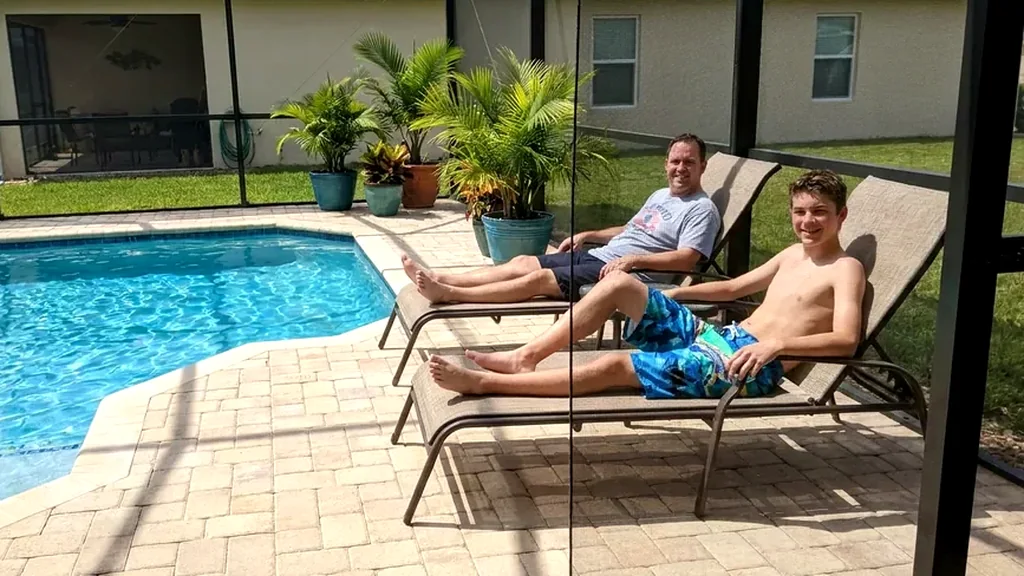
Why hire a local paver sealing contractor in Nocatee?
Nocatee homes carry more paver square footage than many neighborhoods, so a small mistake gets repeated across a big surface. To hear how a local contractor handles that, ask for a free estimate.
A free walk of the whole lot
The contractor looks at the driveway, lanai and walkway together at no charge, then gives you a price before you agree to anything.
A range to hold a bid against
Northeast Florida companies commonly publish $1.75 to $3.25 a square foot, a handy yardstick when a Nocatee quote arrives.
A finish that suits the house
Matte keeps a driveway quiet and hides cart scuffs. A wet look suits a pool deck but shows wear sooner.
You make the decisions
You choose the date, the finish and whether to go ahead. Your HOA questions stay with you and the contractor.
Get Your Free Estimate in Nocatee
Tell us about your pavers in Nocatee.
Free, no obligation
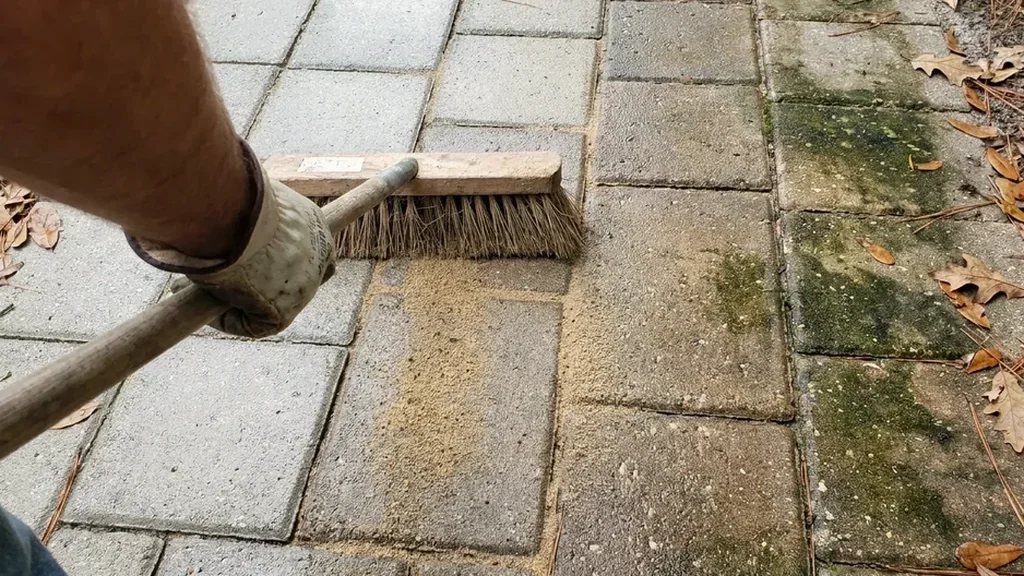
What paver problems show up most in Nocatee?
A wide driveway that loses sand in many places
A St. Johns County paver company says Nocatee homes tend to have a lot of paver square footage, with wide driveways and big pool decks. More surface means more joints, and joints lose sand when rain and sprinklers work on them. Lost sand lets soil in and gives weeds a start. A contractor refills them before any coat goes on. On a driveway of a thousand square feet or more, even a thin strip of open joints along the curb adds up to a lot of sand to replace. A single missed strip along the garage apron is easy to overlook, yet it is where tires press hardest. One company says a typical driveway there runs 1,000 to 1,500 square feet and a screened pool deck 600 to 1,000. At those sizes, a thin strip of failed joints can mean hours of extra work.
Tire arcs from golf carts and cars
Nocatee's Greenway paths are approved for golf carts, and a company serving the area lists cart tire marks as a common surface problem. Tight turns near the garage leave dark arcs on the pavers. Sealer does not erase them, so they are cleaned first. A matte coat then hides new scuffs better than a high gloss. Cart wheels also pick up grit, which can scratch a coat, so a clean surface before sealing matters twice.
Mildew under a screened pool cage
The same company lists pool deck mildew among the usual complaints here. A screen cage keeps rain off but also holds shade and damp air on travertine and pavers below it. Natural stone takes sealer differently than concrete pavers, which means the product has to match the surface. Ask for a deck finish that does not turn slick. Splash from the pool adds chlorine to the mix, and sun fades color over time, so the right deck coat protects more than looks. A Jacksonville cleaning company notes that travertine and brick are more porous than concrete and need a different sealer chemistry, so the product on a pool deck deserves its own conversation.
Damp ground near the preserve
USDA describes the St. Johns soil series as poorly drained, with a water table within 15 inches of the surface for a large part of the year. Nocatee Preserve runs 3.5 miles along the Tolomato River. Lots near that edge can stay moist, so growth on low walkways may return sooner than on high ground. None of this means every lot is wet. It means the low corners and shaded side yards deserve a closer look before sealing day. Edges beside a pond or the preserve trail are worth pointing out on the first walk. The preserve is public parkland, and the paddle launch on Tolomato Road gives kayakers access to the river, so water sits close to many back lots.
A first coat that never went on
A Jacksonville exterior company says sealing helps most on pavers that were never sealed and are three to eight years old. Nocatee grew from 4,524 people in 2010 to 22,503 in 2020, so plenty of drives are in that window. Brand-new brick pavers can soak up the first coat, so a second pass may be needed. The wait for new pavers is about 60 to 90 days, which lets trapped moisture escape and lets mineral haze come up to be treated. Ask whether a second pass makes sense on the first coat, since bare pavers can drink the sealer unevenly.
Does my Nocatee neighborhood change how pavers get sealed?
It can, because Nocatee is a set of villages built at different times. Crosswater, gated Coastal Oaks, Greenleaf Village, Twenty Mile and River Landing are among the names, and Del Webb Nocatee is a 55+ community. Tell the contractor your village when you ask for a free estimate.
Newer streets tend to have younger pavers, and a young surface is cleaned and sealed differently from an older one. Some Nocatee homes also have travertine around the pool, which calls for a different product than a concrete driveway does. Call (386) 977-8354 and describe what your house has.
Many Nocatee homes belong to an association. Under Florida Statute 720.3035, an HOA may enforce the look of improvements only as far as its declaration or published guidelines say. A natural-look coat may raise no questions, but a color change might, so read your guidelines first. Then ask for a free estimate and ask about finishes.
What does paver sealing cost in Nocatee?
Around Northeast Florida the published rate is $1.75 to $3.25 a square foot for washing, joint sand and sealer. Because Nocatee driveways and pool decks are large, the total can climb even when the rate stays modest. Failed old sealer, heavy mildew and missing joint sand push a quote toward the top. To get a figure for your lot, ask for a free estimate.
Smaller add-ons change the math less than the main surfaces do. A short walkway is quick, but a screened lanai with a hard-to-reach corner takes more hand work. Call (386) 977-8354 and the contractor can say which parts of your property add time and which do not.
| Paved area | Typical example | Clean, sand and seal |
|---|---|---|
| 300 sq ft | Small patio or walkway | $525 to $975 |
| 600 sq ft | Two car driveway | $1,050 to $1,950 |
| 1,000 sq ft | Large driveway or pool deck | $1,750 to $3,250 |
| 1,500 sq ft | Driveway plus pool deck | $2,625 to $4,875 |
Math based on the $1.75 to $3.25 per square foot that Northeast Florida paver companies publish. Your contractor sets the actual price after seeing the surface. Repairs, leveling and stripping failed sealer are usually extra.
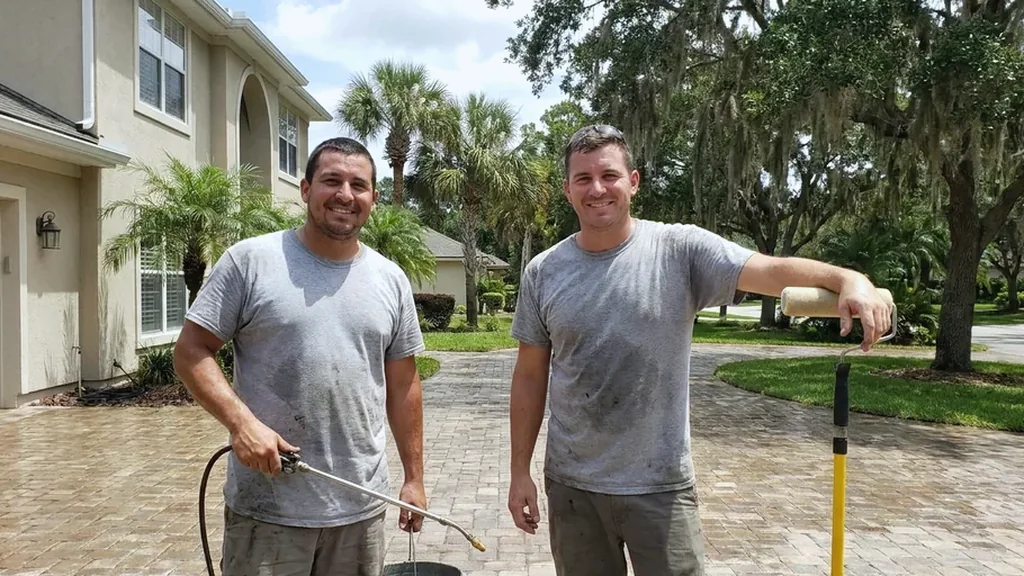
How does a paver sealing job work in Nocatee?
Measure the surfaces and check the base
The contractor walks the driveway, walkway and lanai and measures each one, since price follows square footage. Low or lifted spots get marked for repair, because sealing over a dip only preserves it. A coat laid down years ago may still be there, and its type matters. Water-based sealer will not stick to a solvent-based coat, so the old product decides. Send photos of stains or low corners ahead of time, if you like.
Wash off the film, mildew and tire arcs
Cleaning clears green growth, pool deck mildew and the dark cart arcs by the garage. Travertine gets gentler handling than concrete. Wash water is aimed away from beds and, where possible, away from the pool. The goal is a bare, clean surface for the coat. Pavers can look patchy until they dry through, which is normal. Gentle settings protect the finish on travertine, which scratches more easily than concrete. A good wash also shows how much color is left in the pavers, which helps you choose between matte and a wet look.
Refill the joints with sand
Washing takes out joint sand, so the contractor puts it back before sealing. On a wide driveway that is a lot of joints. Full, swept joints keep soil and weeds out. Wet ground near the preserve may need extra checking after a storm. Silica sand is the usual fill, and it should sit level with the stone so water runs off rather than pooling.
Let everything dry
Sealer needs a dry surface. Most white or cloudy results come from sealing damp pavers or laying the coat on too thick. A screened lanai can stay damp longer than an open drive. The contractor checks each area and waits for the forecast to cooperate. A delayed start beats a coat sealed over wet stone. Cool mornings can leave dew on a shaded lanai, so the start time may shift later in the day.
Apply the coat you picked
Sealer goes on by spray, then a roller smooths it for an even finish. Choose matte for a quiet look or a wet look for deeper color, knowing the wet look shows scuffs sooner. Many Nocatee homes sit in full sun, and local companies often quote two to five years per coat. Ask when carts and cars may return, since cars usually wait about a day. Note the product name and the date so a future coat can be matched.
Complete paver services in Nocatee
A Nocatee job runs in a set order: wash, refill the joints, let the stones dry and then seal. Because driveways here are wide, the sand step can take as long as the wash. Sealer goes on last so nothing dirty is trapped under it. Call (386) 977-8354 to ask how long each stage takes on your lot.
Driveways, walkways, lanais and pool decks each wear in their own way. Drives show tire arcs, lanais grow mildew and pool decks take splash and sun. When you ask for a free estimate, list every surface you want done so each gets its own line in the quote.
Sealer choice starts with the surface. Concrete pavers and travertine do not take the same product, and water-based sealer cannot go over solvent-based sealer. Then you pick matte or a wet look. Call (386) 977-8354 to talk through which finish fits your Nocatee home and your HOA guidelines.
Timing depends on the weather and on the age of the pavers. The wet season runs May through October, while November to April is often drier. Brand-new pavers should wait about 60 to 90 days before the first coat. For a date that works on your street, ask for a free estimate.
Questions to ask before you hire
- What happens to the weeds and moss in my paver joints before the sand goes in?
- What do you do if rain is expected on the day of the job?
- How long should I keep cars and foot traffic off after sealing?
- Will the sealer make my pool deck slippery when it is wet?
- Can you tell me whether the sealer leaves a wet look or a natural finish?
- Do you fix pavers that have sunk or shifted before you seal?
- How do you handle pavers near a lake or pond where the ground stays damp?
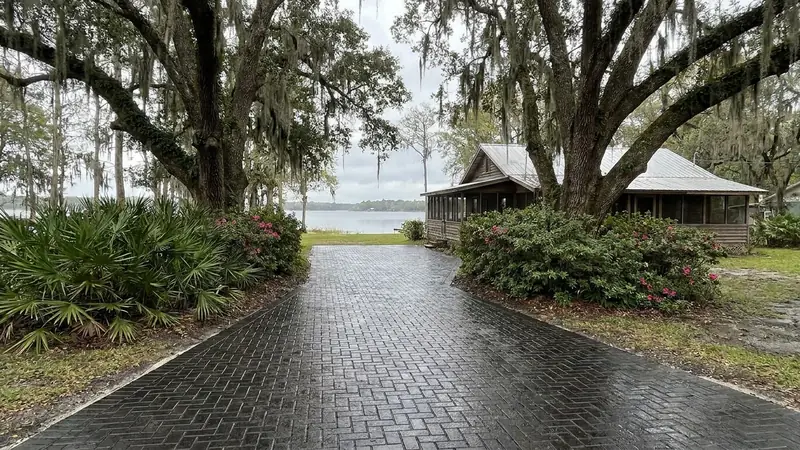
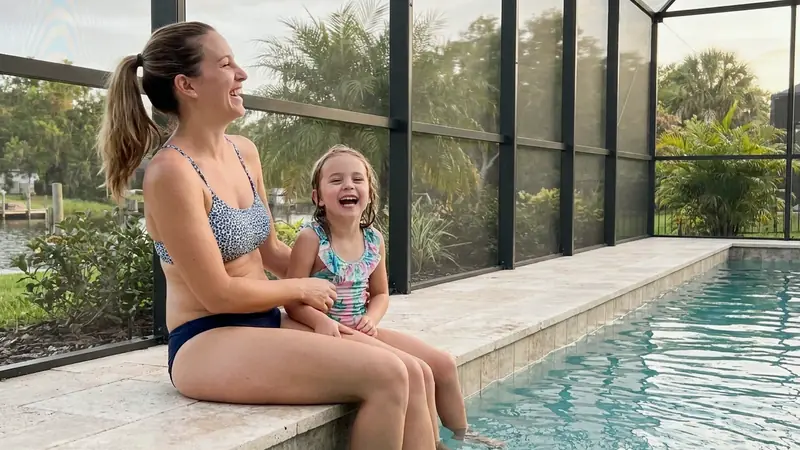
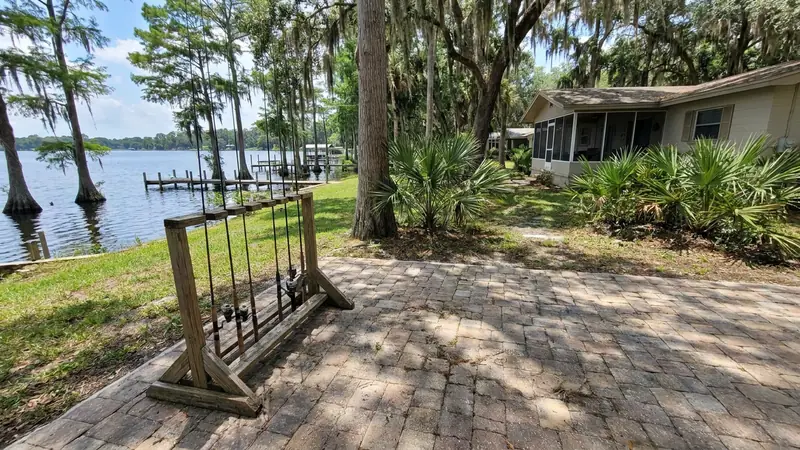
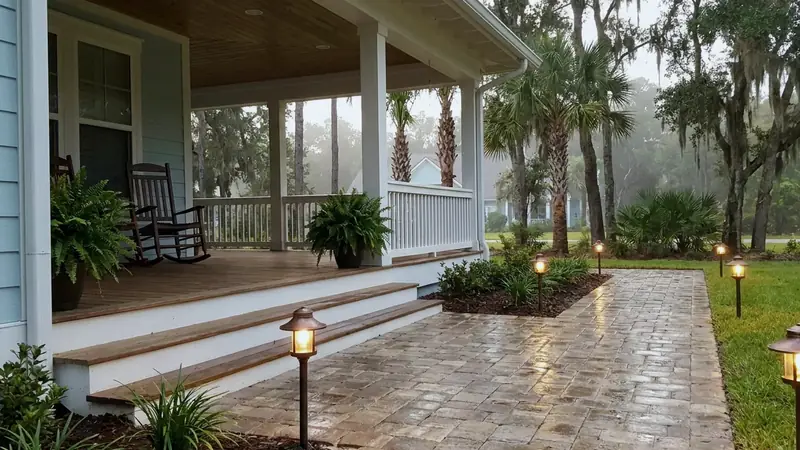
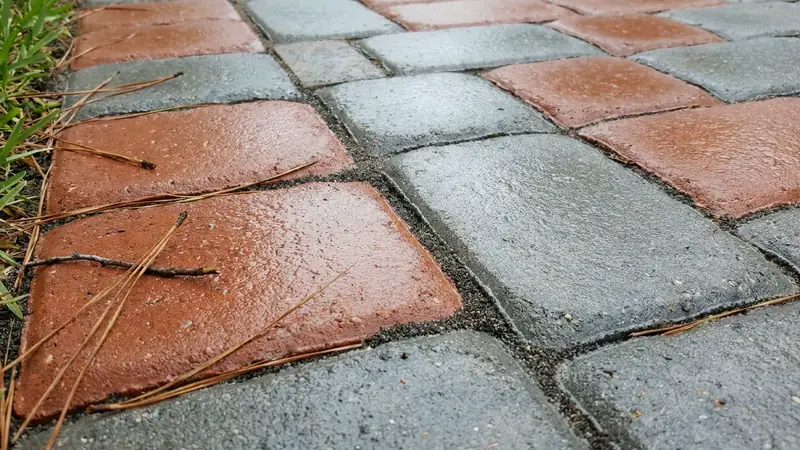
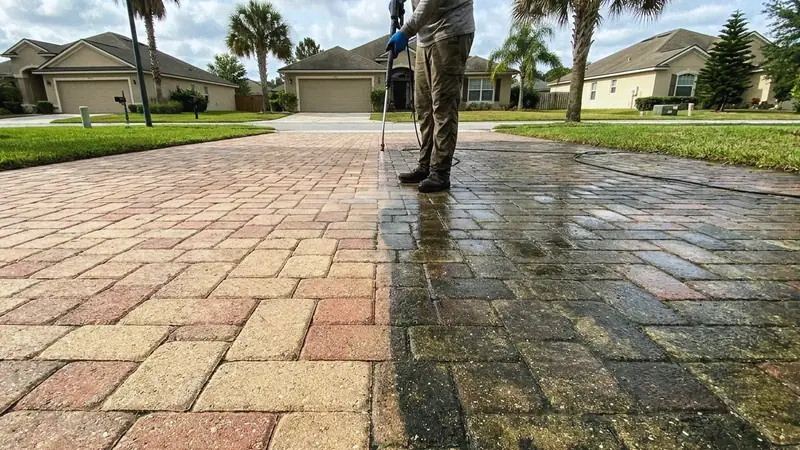
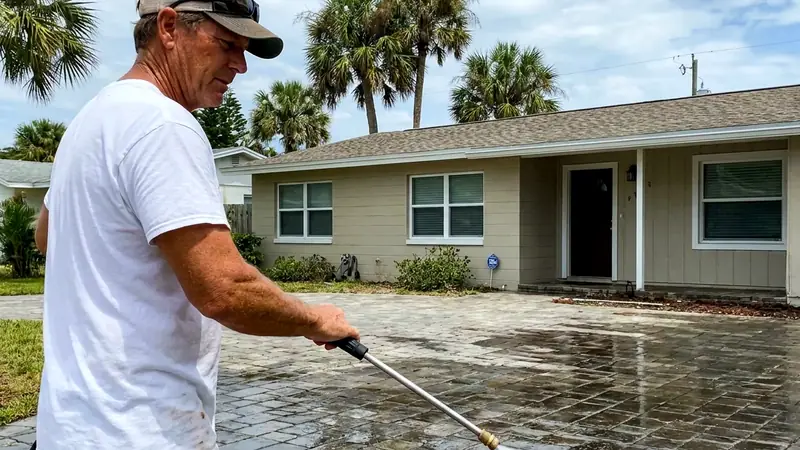
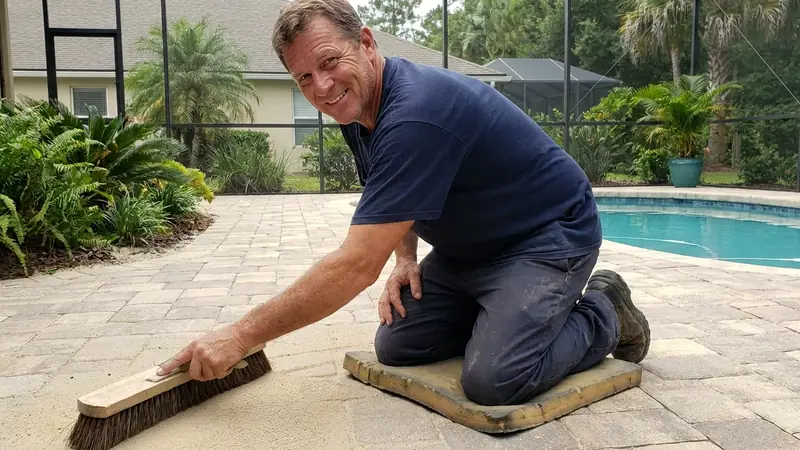
What do sealed pavers look like around Nocatee?
Why local matters in Nocatee
A contractor who knows Nocatee understands that one house can hold a driveway, a lanai and a pool deck, each made of something different. Knowing that up front avoids using one product on all three. It cuts the guesswork at the first visit. To reach a contractor who already knows these villages, call (386) 977-8354.
Local work also means knowing the HOA side of Nocatee, since many villages have guidelines. A contractor who has seen them can say whether a natural finish is likely to be a quiet change. You still check your own documents. You can ask for a free estimate and ask how the contractor handles that question.
Weather matters here as well. Summer afternoons bring thundershowers, and ground near the Tolomato River stays damp. A local contractor schedules around both so the surface is truly dry before sealing starts. If that sounds sensible, ask for a free estimate and mention which village you live in.
How did Nocatee grow, and why does that matter for my pavers?
Approval came in 2001 as a Development of Regional Impact, and The PARC Group broke ground in 2005. The community covers 13,323 acres, and most pavers here were laid in the years since. That means many driveways are reaching the age where a first coat helps. If your pavers have never been sealed, ask for a free estimate.
The Nocatee Preserve covers 2,400 acres along the Tolomato River, and a county paddle launch sits on Tolomato Road. Water parks, trails and the Splash Park and Spray Park round out the community. If you live close to the preserve or the paddle launch, call (386) 977-8354 and give your street.
Frequently Asked Questions
How much does a square foot of paver sealing cost in Nocatee?
A full wash, sand and seal runs $1.75 to $3.25 per square foot, according to the range Northeast Florida companies commonly publish. Nocatee's large driveways and pool decks make the total bigger even at a modest rate. Have the quote show the measured square footage so you can check the rate. Expect the quote to list the measured area, so the price per square foot is easy to check. A big Nocatee pool deck is billed by its own square footage, so it shows up as its own line.
Is it a good idea to seal pavers in Nocatee, Florida?
Yes, for most owners. Sealing slows fading, helps lock in joint sand and makes weeds and ants harder to settle in. In Nocatee, where many pavers are three to eight years old and never sealed, a first coat often makes sense. Ask whether the finish is chlorine resistant if the sealer will touch a pool deck.
Which paver sealer works best for Florida homes?
It depends on the surface. Concrete pavers and travertine do not take the same product, and water-based sealer cannot go over solvent-based sealer. Ask the contractor for the product name and whether it leaves a matte or wet look. If one stone sits lower than its neighbors, mention it, because a sunken area is reset before it is sealed.
Is it better to spray or roll paver sealer?
Most professionals do both. A Jacksonville company says crews spray first and then back-roll. Roller-only work can leave lap lines, while spray-only work can go on too heavy and cloud. Ask the contractor how they test for dryness, since a dry surface is the one thing sealer must have.
Can you pressure wash brick pavers before sealing?
Yes, but pressure must match the surface. Hard washing can loosen joints and take out joint sand, so a contractor sets the pressure to the paver and refills the joints afterward. Brick and travertine are more porous and need extra care. Cars stay off for about a day, and foot traffic is usually fine within a few hours.
How soon can I seal new pavers in Nocatee?
A Northeast Florida company says to wait about 60 to 90 days so trapped moisture can escape and white mineral haze can be treated first. Moisture sealed in too early stays under the coat. A contractor can inspect the surface before deciding. The first walk of the lot is free, and you decide what happens next. Waiting also lets the color settle, which helps the coat look even once it dries.
Will sealer remove golf cart tire marks?
No, sealer does not erase marks. The marks have to be cleaned off first, and then the coat helps resist new ones. A matte finish hides fresh scuffs better than a wet look, which shows wear sooner. Keep the paperwork from any earlier sealing, because the old product decides what can go on top.
Do I need HOA approval to seal my pavers in Nocatee?
It depends on your declaration and guidelines, which differ by village. The statute lets an association enforce looks only as far as those papers state or clearly imply. A natural-looking clear coat may pass as upkeep, but check before you change sheen or color.
Ready for a Free Estimate in Nocatee?
Call (386) 977-8354 and tell us about your pavers.
Free, no obligation