
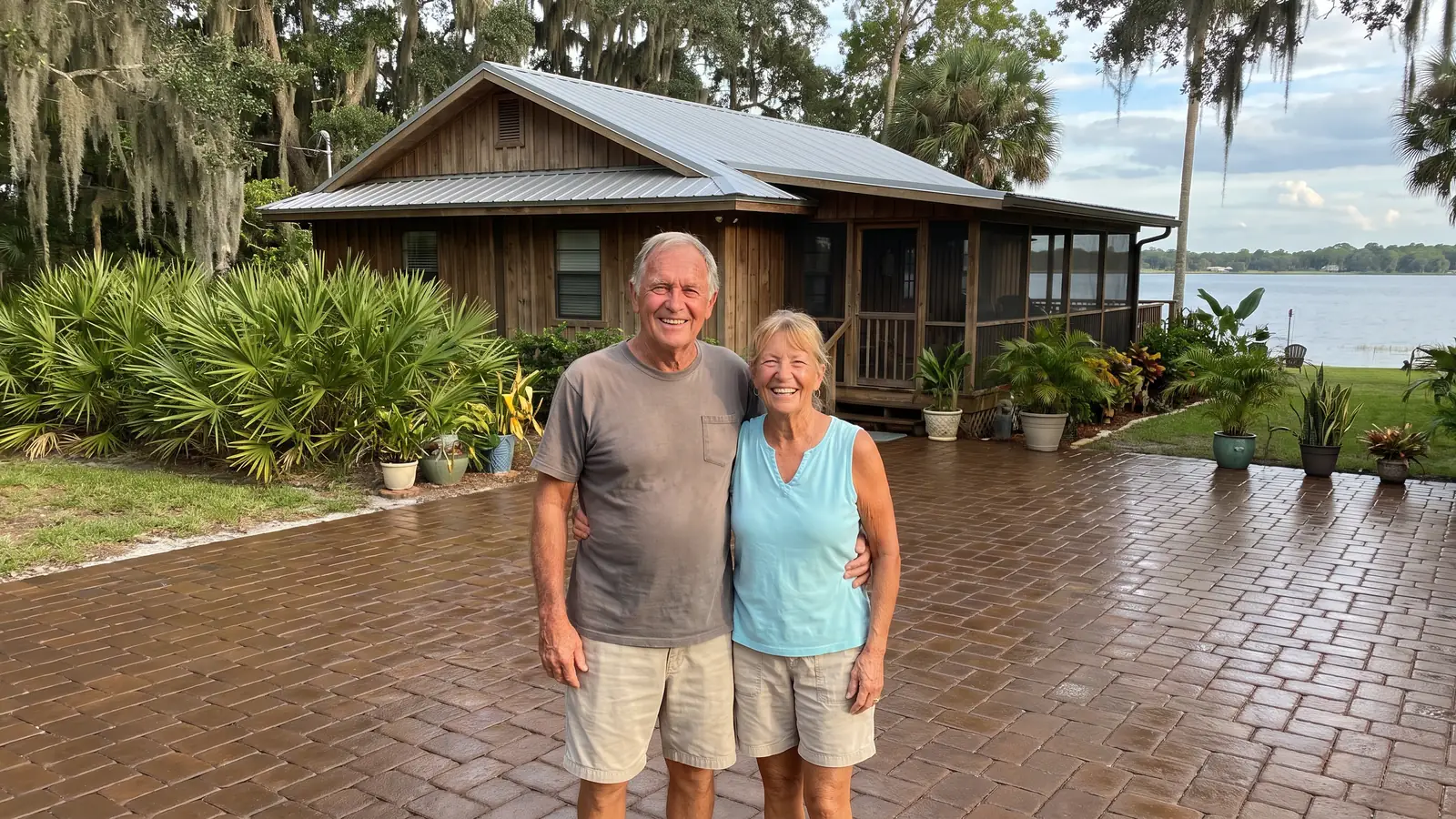
Stubborn marks lifted from lakeside pavers
Paver Stain Removal in Crescent City, FL
Call (386) 977-8354 for a free estimate to lift stains from your Crescent City pavers.
- Brings out deeper paver color
- Fresh joint sand helps lock pavers in place
- Gives weeds less room to grow
- Makes the surface easier to keep clean
- Free estimate, no obligation
Request a Free Estimate
Free, no obligation.
Who can remove stains from my pavers in Crescent City?
A local contractor lifts paver stains across Crescent City, FL, and you will hear back within 1 business day, usually much sooner. The estimate is free, and you can say no. To talk about your marks, call (386) 977-8354.
Not all stains are the same, and the wrong treatment sets some of them. Rust, oil, leaf tannin, mildew and white haze each get their own product, and the order matters before any sealer goes on. A contractor can name which you have from a photo or a visit. Show where they are when you ask for a free estimate.
Which Putnam County towns can book paver stain removal?
- Palatka
- Palm Coast
- Ormond Beach
- Daytona Beach
- Holly Hill
- DeLand
- St. Augustine
- South Daytona
- World Golf Village
- Orange City
- Port Orange
- Silver Springs Shores
- DeBary
- Deltona
- Eustis
- Ocala
- Mount Dora
- Lady Lake
- New Smyrna Beach
- Nocatee
- Asbury Lake
- Fruit Cove
- Sanford
- The Villages
- Fleming Island
- Edgewater
- Lake Mary
- Middleburg
- Tavares
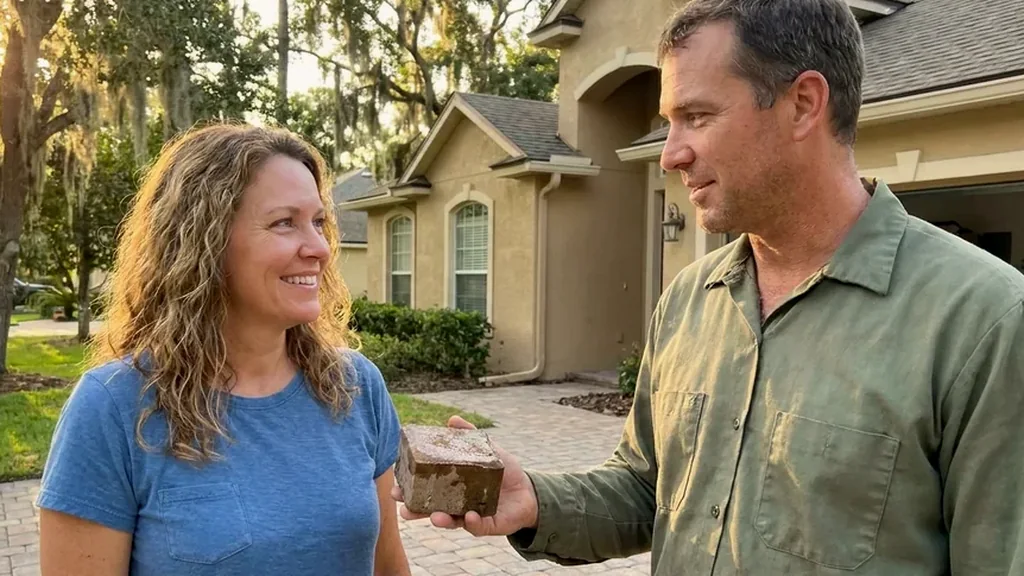
What kind of stain is on my pavers?
Five show up around Crescent City, and the color usually gives it away. To have a contractor confirm, call (386) 977-8354.
Orange or rust marks
Well water and reclaimed irrigation carry iron, and it paints orange stains on pavers. Western Interlock adds that high-iron soil can cause rust-like marks with no metal at all.
Brown leaf marks
Live oaks drop tannin, which leaves brown stains. Wet leaves left lying make them darker.
Dark oil spots
Cars and boat trailers drip. Oil soaks in unless it is blotted early and lifted with a product made for oil.
Green, black or slimy film
Mold, mildew, algae and moss are slippery as well as ugly, and shaded damp corners grow them first.
White haze
Efflorescence is salts working up out of the paver. It is not dirt, and Unilock says it can take up to a year to fade.
Why do oak leaves leave brown marks on pavers?
Tannin is the cause. A Northeast Florida washing company says live oaks drop tannin that leaves brown stains, and Western Interlock says leaf stains come from tannins and builds its fall sweeping advice around them. Crescent City is known for old oaks, and many yards are shaded by them. A contractor may use hot water or a treatment made for organic stains, tested on a hidden patch. To plan for the oaks in your yard, ask for a free estimate.
The marks darken when leaves stay wet. Humid Putnam County summers keep them wet. Ask how often to sweep when you call (386) 977-8354.
Why do orange spots appear and will pressure remove them?
Iron is the usual cause. A Northeast Florida washing company says well water and reclaimed irrigation leave orange stains, and that extra pressure makes them worse. Western Interlock says rust is lifted with an acid-based cleaner that needs safety gear, which is why a contractor handles it. Sprinkler heads aimed at the pavers are the likely source. Show the fan shape of the marks when you ask for a free estimate.
Rust must go before any sealer. Sealing over it locks the color in. To have the spots treated first, call (386) 977-8354.
How are oil and grease lifted from pavers?
Fast action and the right product. Western Interlock says to blot a fresh drip, not wipe it, and to use an oil extractor product. Unilock says a dedicated paver cleaner handles tough oil and grease. Old oil under a carport or boat parking space may leave a faint ghost. To get an honest read, call (386) 977-8354.
Sealing afterward helps. Unilock says sealer helps keep oil and gasoline from soaking in, so the next drip stays on top. Ask about a coat when you ask for a free estimate.
Is the white haze on my pavers a stain?
Usually it is efflorescence. Unilock says it is a hazy film from salts that fades over 2 to 3 months, sometimes up to a year. Western Interlock waits 30 to 60 days after install before sealing so it can show up and be cleaned off. Treating it early costs little, and a sealing company lists efflorescence treatment at $0.05 per square foot. If your pavers are new, mention it when you ask for a free estimate.
Can every paver stain be removed?
No, and a straight answer matters. A Northeast Florida paver company says rust, oil and deep stains may not come out completely and results cannot always be guaranteed. Pavers also carry old stains in their pores. A lighter mark and a cleaner surface is a common outcome. Ask what to expect when you call (386) 977-8354.
Should stains come out before the pavers are sealed?
Yes. Unilock warns that sealer can accentuate stains, so they should be treated first. Stripping an old coat may also be needed if the stain sits under it. The restoration guide covers that case, and the cleaning guide covers a wash and fresh joint sand. To plan the order for your pavers, ask for a free estimate.
What is the stain removal process, in order?
The process runs from the lightest touch to the strongest. Blot a fresh spill instead of wiping it, as Western Interlock advises. Next comes the product that matches the stain, such as an oil extractor for grease or an acid-based cleaner for rust. Rinse, let the pavers dry, then refill the joints with sand. Sealer goes on last, because Unilock warns that sealer can accentuate any stain left underneath. Ask the contractor to write that order down when you ask for a free estimate.
Which treatment fits which paver stain?
Here is a quick guide, one stain at a time. Match yours to the closest card, then tell the contractor what you see when you ask for a free estimate.
Fresh oil drip
Blot it, do not wipe it, as Western Interlock advises. Wiping can push it further in.
Old oil shadow
A dedicated paver cleaner for oil, according to Unilock. Very old oil can leave a faint ghost even after treatment.
Rust from sprinklers
Orange fans from well or reclaimed water point to an aimed sprinkler head. A rust treatment comes first, not extra pressure.
Rust from the soil
Western Interlock says high-iron soil can leave rust-like marks, so the source may be the ground and not the water.
Brown leaf tannin
Live oaks drop tannin, and a Northeast Florida washing company ties the brown marks to those leaves.
Leaves left sitting
Marks darken the longer wet leaves stay put. Weekly sweeping in fall keeps them from setting.
Green mildew film
Damp shade grows it first, and it is slippery as well as ugly. It rinses off a sealed surface more easily.
Algae and mold
Southwest Florida cleaners say humid air feeds mold, mildew and algae. Shaded corners and edges by a downspout show them early.
White haze, new pavers
Efflorescence is salt working up out of the stone. Unilock says it usually clears in two to three months.
White haze that lingers
It can last up to a year per Unilock, so sealing waits until the haze is gone.
Stain under old sealer
If the mark sits beneath a failed coat, the coat may need stripping before the stain can be reached.
Marks near the grill
Grease and food drips are oil stains. Treat them as oil and avoid scrubbing them wider.
Boat trailer lines
Trailer tires and drips leave dark lines on a drive near the lake. Oil products handle the drips, and a wash handles the rubber.
Stains after sealing
Sealer helps hold drips on top so they lift easier. It will not erase a stain that was already there.
Mixed marks on one drive
Several stains on one surface each get their own product, in the order the contractor writes on the estimate.
Marks that will not budge
Rust, oil and deep stains may not come out completely, a Northeast Florida paver company warns. Expect an honest answer.
What does paver stain removal cost in Crescent City?
No page found a price for stain removal as its own service, so the table uses the published pieces: cleaning from $0.22 per square foot at a Northeast Florida paver company, efflorescence treatment at $0.05 per square foot from a sealing company, and the $1.75 to $3.25 range for a full clean, sand and seal. Rust and oil are quoted after the contractor sees them. For a number that fits your marks, ask for a free estimate.
Size, how deep the stain is and how many kinds you have all move the price. To compare a bid in hand with these pieces, call (386) 977-8354.
| Paved area | Cleaning from $0.22 | White haze treatment at $0.05 | Clean, sand and seal range |
|---|---|---|---|
| 300 sq ft (entry walk and stoop) | $66 | $15 | $525 to $975 |
| 600 sq ft (driveway) | $132 | $30 | $1,050 to $1,950 |
| 1,000 sq ft (driveway with a pad) | $220 | $50 | $1,750 to $3,250 |
The cleaning column multiplies the $0.22 per square foot starting rate that a Northeast Florida paver company lists, and the haze column multiplies the $0.05 add-on one sealing company lists. The last column uses the $1.75 to $3.25 range from a Northeast Florida washing company. Rust and oil treatments are not published and are quoted by the contractor.
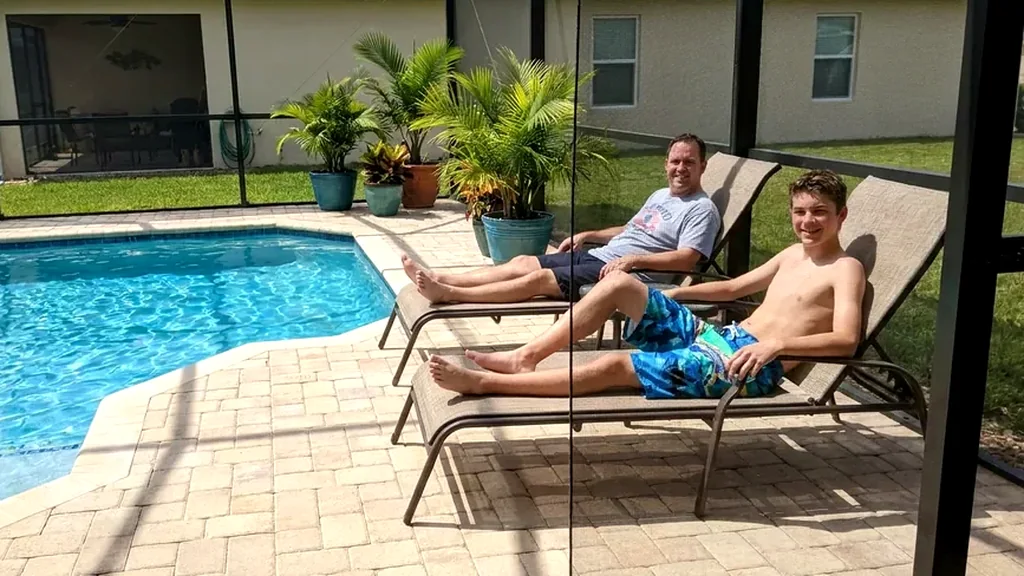
How do I keep stains from coming back near the lakes?
Three habits cut the work. Western Interlock says to sweep or blow leaves weekly, most of all in fall, and to check joint sand for washout. Aim sprinklers off the pavers to stop iron spots. A sealed surface soaks up less, so spills sit on top for a while. The damp air from Crescent Lake and Lake Stella helps mildew along, so shaded corners get a rinse more often. To set a plan, call (386) 977-8354.
A rinse each year suits most yards. Plan stain removal for the drier fall stretch, a Northeast Florida washing company says, since sealer needs dry pavers. Ask for a reminder when you ask for a free estimate.
Which stains are most likely at an older Crescent City house?
Wikipedia counts 824 housing units in Crescent City in 2020, and the median resident is 45. Many lots hold mature oaks, older irrigation and a driveway that has seen years of cars and boat trailers. That mix points to tannin, iron and oil more than to anything exotic. A contractor who works near Crescent City can usually name the cause from the color. To have a stain traced, call (386) 977-8354.
Homes inside the Crescent City Historic District, which sits between Lake Stella and Crescent Lake and is on the National Register, may be older still, with walks laid decades ago. Older pavers hold stains deeper in their pores. Mention the age of the walk when you ask for a free estimate.
What should I ask before booking paver stain removal?
Ask four things. Which stains does the contractor see, and which products will go on each? What happens to the wash water, since Crescent City yards often slope toward a lake or a drain? Will the stain work come before sealing, and can some marks stay behind? Write the answers into the estimate when you ask for a free estimate.
Also ask what protects plants, screens and the garage door while products dwell. Hydro Wash 360, a washing company, covers landscaping, pool screens and garage doors during stripping, and the same care suits strong stain products. The paver cleaning page explains the wash that follows. To start the conversation, call (386) 977-8354.
Does a stain remover need a license in Florida?
Sites that explain the rules say Florida has no state license for pressure washing alone, and that a local business tax receipt usually applies. Work that touches roofing or similar trades does need one. Confirm any claim on the state's public license search or with the county tax collector, then ask for proof of insurance. To ask a contractor yourself, call (386) 977-8354.
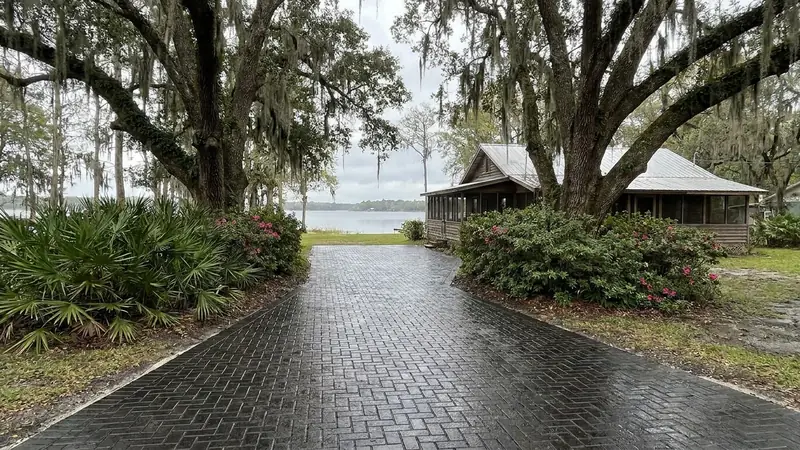
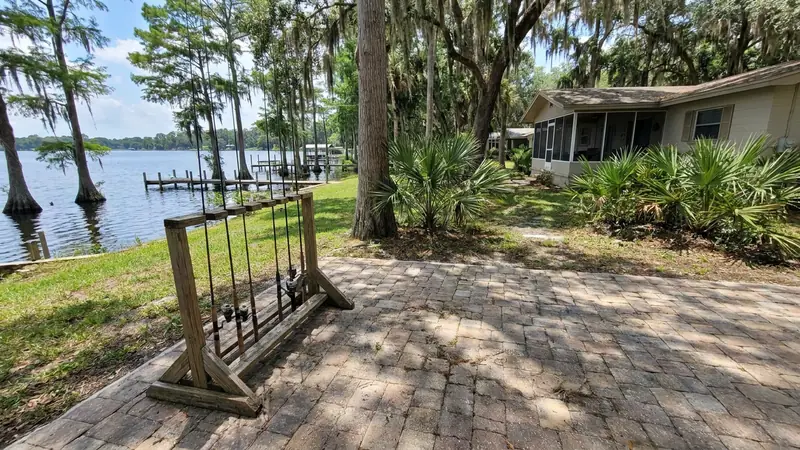
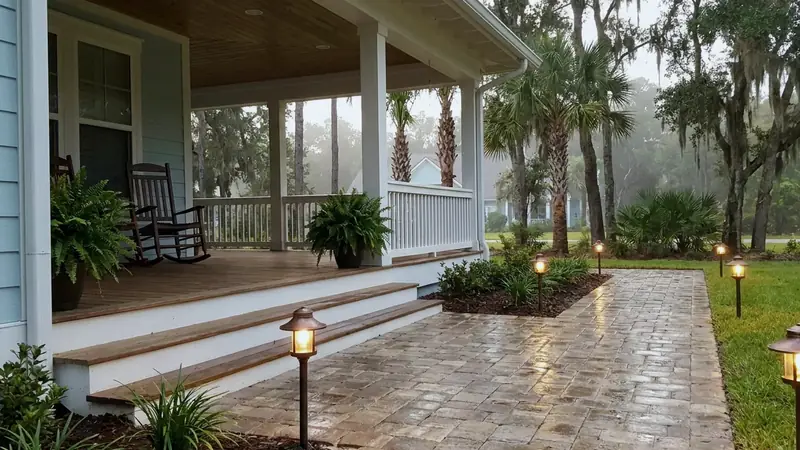
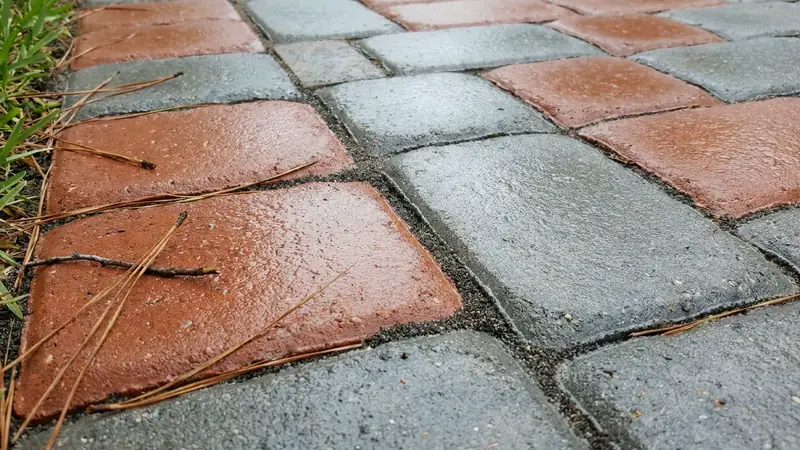
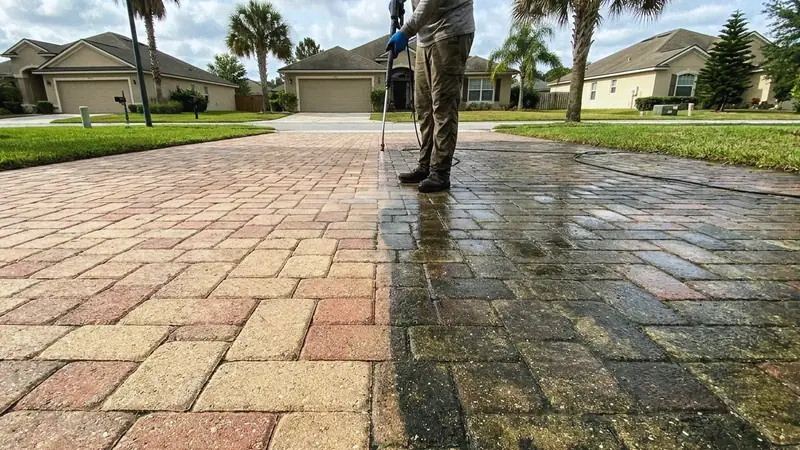
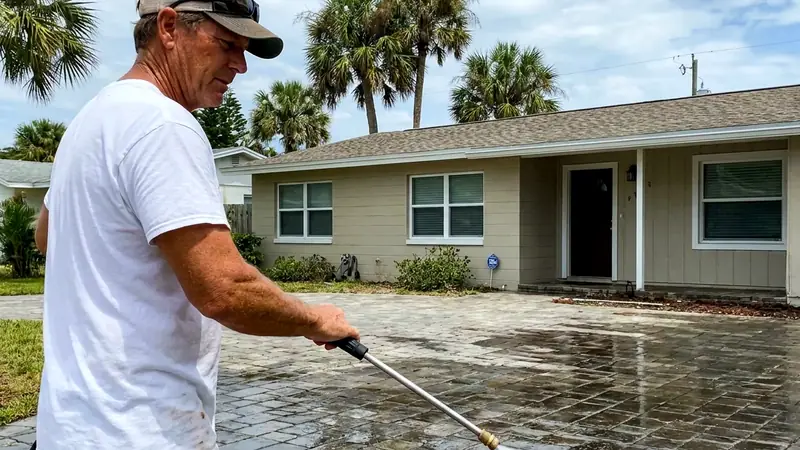
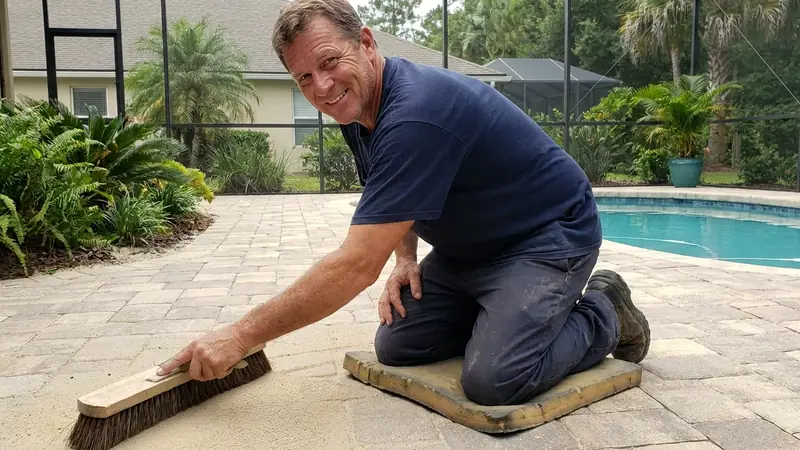
What do pavers look like after stain removal around Crescent City?

Frequently Asked Questions About Paver Stain Removal
Do you need a license to pressure wash in Florida?
Sites that explain the rules say Florida has no state license for pressure washing alone, and that a local business tax receipt usually applies. Other trades such as roofing do need state licenses. Ask any contractor for proof of insurance and which local receipt they hold.
How can I clean my backyard pavers?
A contractor washes in sections, treats each stain with its own product and refills the joints once everything dries. Rust, oil and leaf marks each call for a different treatment, so the quote should list them.
How much does paver stain removal cost?
No page found prices stain removal alone. One Northeast Florida paver company starts cleaning at $0.22 per square foot, and a sealing company lists efflorescence treatment at $0.05 per square foot. Rust and oil are quoted after the contractor sees them.
Will pressure remove rust stains from pavers?
Usually not, and more can make them worse. A Northeast Florida washing company says iron in well water or reclaimed irrigation leaves orange stains that need a rust treatment, not extra pressure.
Can I pressure wash brick pavers?
Yes, washing is where every sealing job begins. Hard pressure can pull joint sand out, which Landscape Ontario says often has to be put back, so the joints are refilled before any sealer. Pressure alone will not lift rust or oil, which need their own products.
What takes oil off a paver driveway?
A dedicated cleaner for oil and grease, according to Unilock, a paver maker. Western Interlock says to blot a fresh spill and use an oil extractor product. Old oil can ghost even after treatment.
Why are my pavers stained brown under the oaks?
Live oaks drop leaves and tannin, and a Northeast Florida washing company says it leaves brown stains. Western Interlock explains that leaf stains are tannins and a deep one needs more than a rinse.
Is the white haze on new pavers a stain?
Usually it is efflorescence, natural salts rising to the surface. Unilock says it fades in 2 to 3 months and can take a year, and sealing waits until it clears.
Can every paver stain be removed?
No. A Northeast Florida paver company says rust, oil and deep stains may not be removed completely and results cannot always be guaranteed. Sealing before a stain sets helps.
Will sealing after stain removal keep stains away?
It slows them. A sealed surface soaks up less, and Unilock says sealing helps keep oil and gasoline from soaking in. It also warns that sealer can accentuate stains left behind, so stain work comes first.
Why does my driveway near Crescent Lake stain faster than a dry yard?
Damp ground, shade and about 104 rain days a year, per Wikipedia, keep the surface wet, so mildew and tannin take hold sooner. Algae and moss are also slippery, which a Gulf Coast paver company lists among the things it cleans.
Other Paver Services Near Crescent City
Stains are one part of paver care. Pick the service that fits, or call (386) 977-8354 to talk it through.
Ready to lift the stains off your Crescent City pavers?
Phone or send the short form. A contractor replies within 1 business day, often much sooner, and the visit is free.
Free, no obligation